You don’t need every baby product before your newborn arrives. This guide covers gear for starting solids, getting around, and a more mobile baby—items you can plan for now and buy as your family needs them. Most come into play around six months or later, but readiness and product limits matter more than a birthday.
At a glance: what can wait?
For starting solids: a suitable high chair, a few spoons, one bowl or plate, and a practice cup. A wipe-clean mat is a helpful extra.
Before baby is mobile: install appropriate gates, secure furniture, and address accessible cords, cabinets, and outlets. Start assessing hazards now rather than waiting for the first crawl.
Wait and see: a second stroller, extra cup styles, and a shopping-cart cover. A convertible car seat is needed before your infant seat is outgrown—not at a fixed age.
This post contains affiliate links. If you buy through them, I may earn a small commission at no extra cost to you. As an Amazon Associate I earn from qualifying purchases.
Placemats, bowls & plates
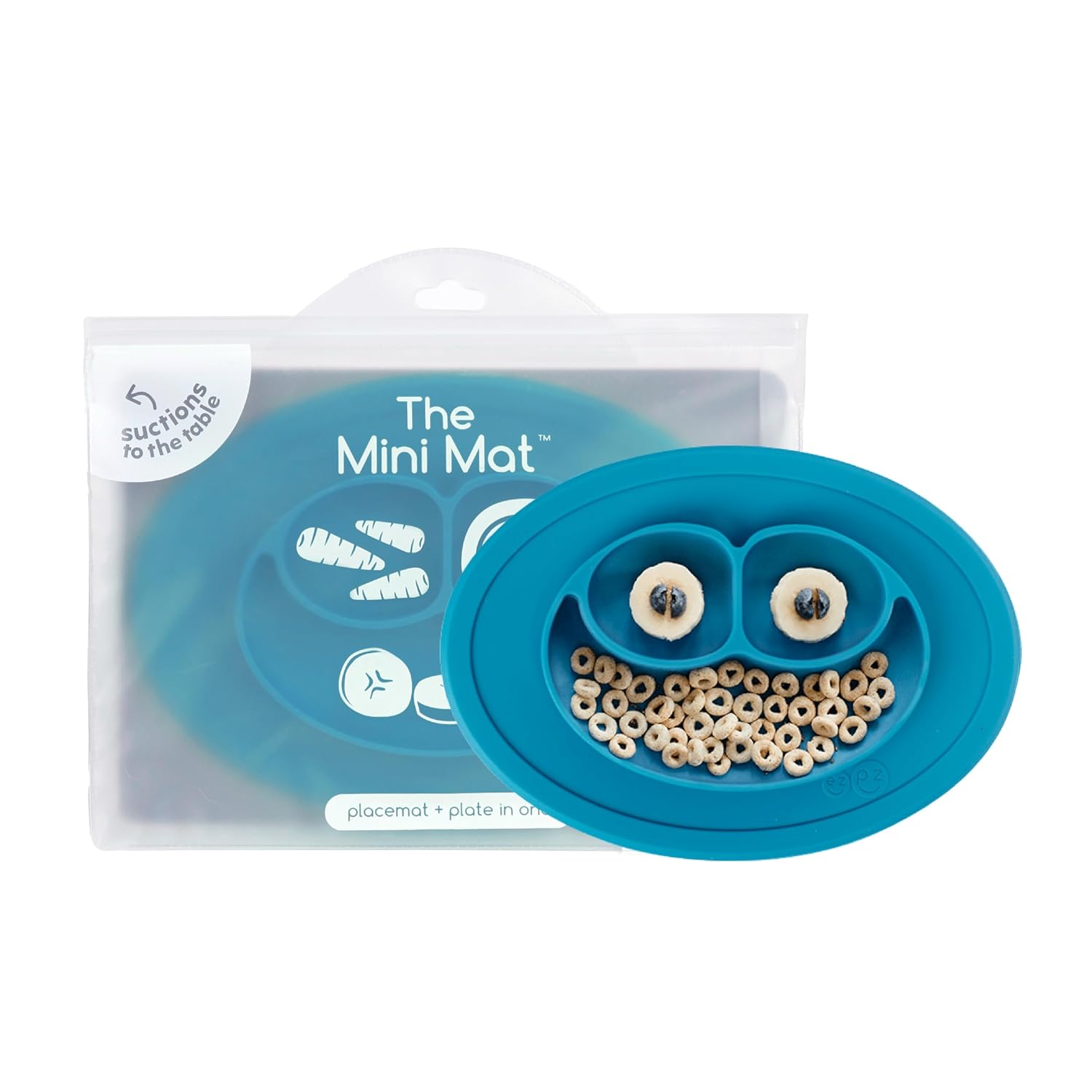
A wipe-clean silicone mat makes meals easier to clean up at home or out. I like a mat with a catch pocket for crumbs; a suction bowl or divided plate is another option. Start with one or two pieces so you can see what works on your table. Consider: suction depends on the surface, and some pieces need hand-washing.



Utensils
Look for a small, shallow spoon or a short pre-spoon that is easy for little hands to hold. You only need a few to start; always supervise meals.
When to start: introduce solids around six months, when your baby shows developmental readiness. Look for good head control, sitting with support, and the ability to swallow food. Ask your pediatrician about your baby’s readiness and individual needs. See the CDC’s starting-solids guidance.
NumNum pre-spoons worked well for my daughter when she was learning to feed herself at seven months. Best for: early practice with thicker purées. Consider: they serve a different purpose from a spoon that scoops. Read more about our experience introducing solids and baby-led eating.

Straw & practice cups
Start with one practice cup rather than a cupboard full of options. Look for easy cleaning, a manageable size, and replacement parts. Straw cups can be convenient for outings; an open cup is useful for supervised practice. Choose an age-appropriate design and follow its instructions.
Straws


Trainer Cup/360


Another straw-bottle option: THERMOS BABY stainless-steel straw bottle. Check the listed age range and cleaning instructions before choosing it for your child.
Other Nice Stuff to Have





Silicone Infant Toothbrush — A silicone training brush can help baby get familiar with a brushing routine; it is not a substitute for an adult cleaning their teeth.
Counter Chair — We loved having a portable seat for travel and some restaurants. Best for: compatible tables and a baby who meets the seat’s developmental requirements. Consider: table thickness, material, stability, and the manufacturer’s restrictions; not every counter is suitable. Always use the restraint.
My favorite older infant toy — I like these sensory balls for hands-on play. Check the current age grading and inspect toys for loose or damaged parts.
Skip padded crib accessories on this list. Keep your baby’s sleep space simple and follow safe-sleep guidance. A crib-rail cover is not an essential purchase.
Do you need a second stroller?
A lightweight or umbrella stroller can be useful for quick trips and travel, but it is easy to wait on this purchase. Try your everyday stroller first: if it is easy to lift and fits your trunk, a second one may add little value.
I bought our UPPAbaby G-LUXE on sale and liked it overall, although the two-handed fold could be annoying. When comparing options, prioritize folded size, carry weight, recline, storage, and the minimum age or developmental requirements. Older model prices and specifications change, so check the exact version before buying.
Baby Gates
Measure your openings and plan gate placement before baby starts moving. At the top of stairs, use a hardware-mounted gate that screws to the wall and is approved for that location. Do not use a pressure-mounted gate there. Follow the exact model’s installation instructions and age limits. See the CPSC childproofing checklist.


We liked how our Retract-A-Gate tucked out of the way when open. Best for: families comparing space-saving barriers for a suitable opening. Consider: a retractable design is not a universal choice for stairs; verify the exact model, location approval, mounting hardware, and installation requirements before buying.
Babyproofing beyond gates
We really like Safety Baby Magnetic Cabinet Locks for our cabinet doors. With this magnet lock, you don’t have to drill anything in the back of the cabinet doors, and you don’t have some clunky plastic thing on the front of your cabinets.


Another alternative that is good for a temporary lock is something like this:


Outlet protection: choose covers or plates your child cannot easily remove and that are suitable for your outlets. Small removable plug covers can become choking hazards. Appearance is secondary to a secure fit.

Window cords: cordless window coverings are the safest choice around young children. Move cribs and climbable furniture away from windows. Cord accessories do not eliminate the hazard; see CPSC window-cord guidance.
If you have a toddler learning to walk, you’ll want to protect their head from sharp corners on tables.

Appliance safety: my son tried to open and climb into the oven, so this is a hazard I take seriously. Use only a lock approved for the specific appliance and surface; a general cabinet strap is not automatically suitable for an oven. Secure the range with its anti-tip bracket and keep children away while cooking.
Shopping Cart / High Chair Cover
A shopping-cart or high-chair cover is a convenience item. I used ours often with my first and third babies, but hardly at all with my second because I was already carrying so much. Best for: families who like a washable cover for outings. Consider: it adds bulk and does not replace the seat’s restraint or make a seat safe for a baby who cannot sit appropriately.
Convertible Car Seat

If you start with an infant car seat, you can choose a convertible seat later—but move your child before any of the infant seat’s fit, height, or weight limits are reached. That may happen well before the first birthday. A convertible seat can also be used from birth if it fits your newborn and is approved for their size.on from which user can have control on it.
What to compare: fit in your vehicle, ease of correct installation, and rear-facing height and weight limits. NHTSA recommends keeping children rear-facing until they reach the seat manufacturer’s maximum rear-facing height or weight limit. A certified child passenger safety technician can help check fit and installation.
What to read next
Sample Amazon baby registry — see how these later-stage items fit into a full registry.
Introducing solids & baby-led eating — read about our family’s approach to early meals.
Baby toys, play & clothing — keep planning for the next stage.