Last updated: October 2026. This post contains affiliate links. If you buy through them, I may earn a small commission at no extra cost to you. As an Amazon Associate I earn from qualifying purchases.
Choosing a stroller is genuinely the hardest baby gear decision you’ll make. Car seats have safety ratings. Cribs have standards. Strollers have opinions — and about four hundred of them, all with names like they were generated by an app.
Here’s the thing nobody tells you at the baby store: there is no best stroller. There’s only the best stroller for how you actually live. The mom pushing through a Brooklyn farmers market and the mom loading into an SUV twice a week need completely different things, and a stroller that’s perfect for one is a daily annoyance for the other.
This guide won’t hand you one answer. It’ll walk you through nine questions that narrow four hundred options down to about three — and then I’ll tell you what I’d actually buy in each category.
Already know what you need? Jump straight to my picks.
The Short Version (If You Only Read One Thing)
Buying one stroller and want it to just work? Get a full-size stroller with a car seat adapter and decent wheels. It’ll carry you from newborn through preschool.
City living, no car, stroller is your car? Prioritize narrow width, big basket, and a one-hand fold. Weight matters more than you think when you’re doing subway stairs.
Suburbs, mostly car trips to the zoo and Target? Prioritize easy fold and light weight. You’ll be lifting this thing constantly.
Planning babies close together? Look at a convertible now. Buying twice costs more than buying right.
Tight budget? A well-chosen $150–200 stroller genuinely works. The upgrades above that are real, but they’re comfort, not necessity.
Now, the questions that get you there.
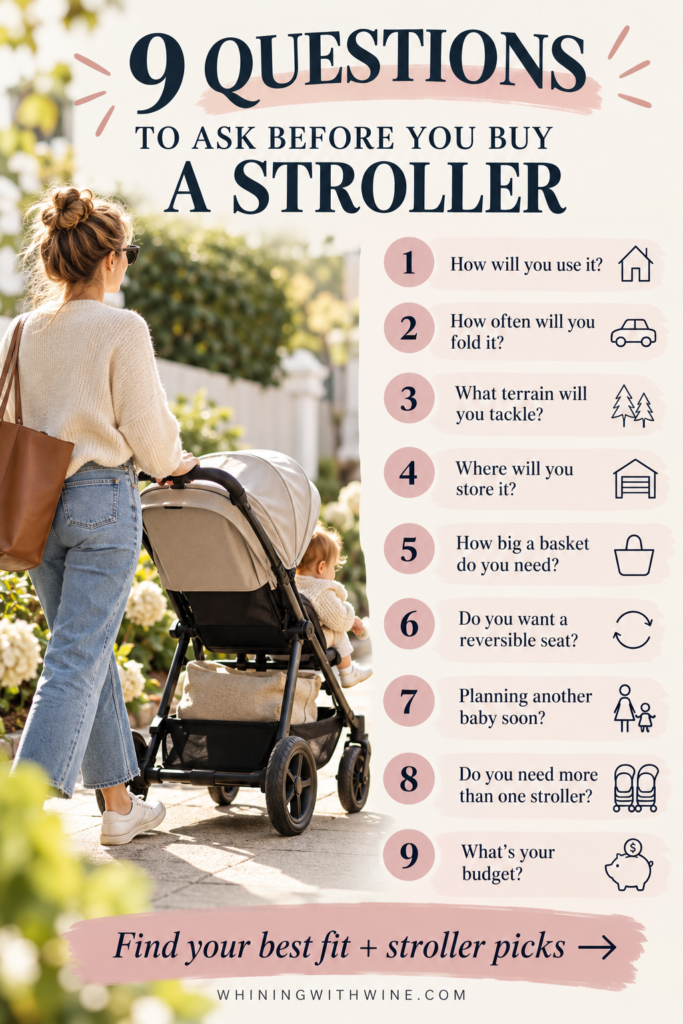
1. What Will You Actually Use It For?
Not what you imagine using it for. What your week actually looks like.
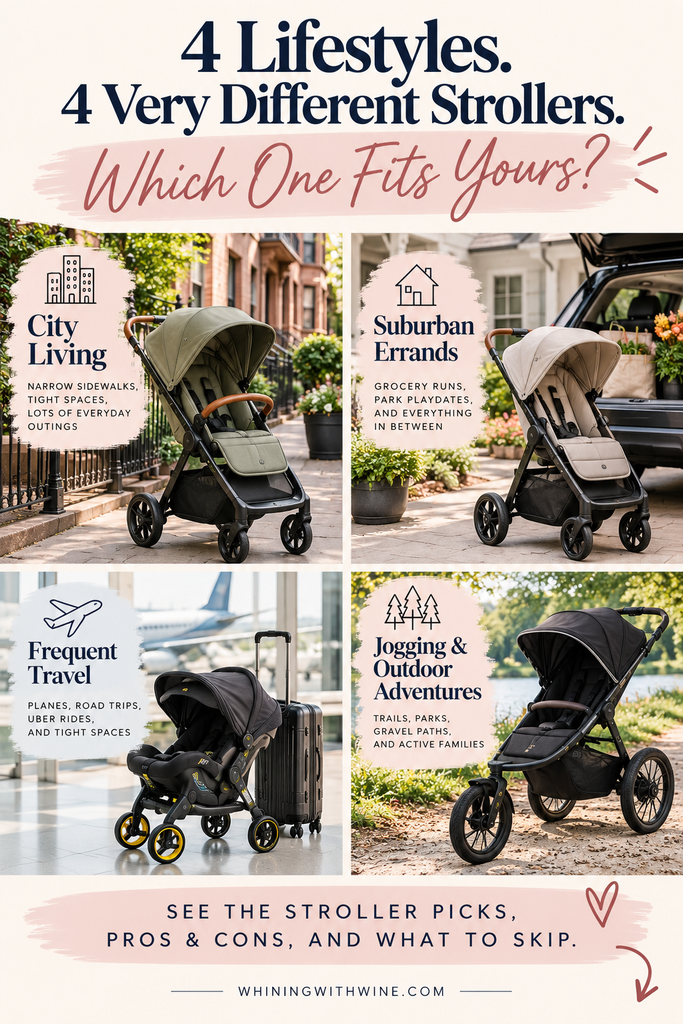
- It’s basically your car. Urban, no vehicle, stroller comes everywhere — errands, restaurants, groceries. You want narrow (restaurant tables and store aisles are brutal), a large storage basket, tight maneuverability, and available weather accessories.
- Neighborhood walks. Width and basket size matter less. Focus on comfort for your kid and whatever else on this list applies to you.
- Running. A jogging stroller can be your everyday stroller, especially if you don’t have space for two. Warning: they’re heavier and fold more awkwardly. Don’t jog with a baby under 6 months. If your jogger doesn’t recline flat, you’ll need a car seat adapter for those early months (walking only).
- Mall, museum, zoo trips. You’ll be lifting this in and out of a trunk constantly. Easy fold and low weight beat everything else.
2. How Often Will You Fold and Carry It?
- Daily. Walk-up apartment, public transit, or in and out of the car every day? Weight is your top priority. Under 20 lbs changes your life. So does a one-hand fold — you’ll be holding a baby with the other one.
- Rarely. Spacious garage, stroller mostly stays assembled? Fold mechanism and weight barely matter. Spend that budget on ride quality and basket size instead.
3. What Terrain Are You On?
- Mostly indoors (malls, museums, airports) — plastic wheels are fine and cheaper.
- Good sidewalks and pavement — plastic wheels are technically doable, but I’d still upgrade to foam or air-filled if the budget allows. The difference in push feel is immediate.
- Broken sidewalks, gravel, cobblestone — you want suspension and larger wheels. This is where jogging strollers and all-terrain models earn their keep even if you never run a step.
- Trails and hiking — air-filled tires and real suspension, non-negotiable.
4. Where Will You Store It?
- Not much space — apartment or car trunk storage means you need a compact fold. A standing fold (it stays upright on its own instead of flopping over) is a small feature that you’ll appreciate every single day.
- Plenty of space — skip this consideration entirely and optimize for something else.
5. How Big a Basket Do You Need?
If you’re grocery shopping with the stroller, basket size stops being a nice-to-have. Look for baskets you can access while the seat is reclined — a lot of them get blocked, and you don’t discover that until you’re in the store with a sleeping baby and a gallon of milk.
6. Do You Want Parent-Facing and Forward-Facing?
Reversible seats let your newborn face you and your toddler face the world. Most parents who have it use it constantly in year one. If that matters to you, you’re looking at modular or reversible-seat strollers, which generally start higher in price.
7. Are You Planning Another Baby Soon?
Close in age doesn’t automatically mean buy a convertible — but it means run the math. Convertible strollers (single now, double later) cost more upfront and don’t handle turns or bumps as gracefully as dedicated singles. But buying a good single and then a good double costs more than buying one convertible. Two kids under three is where they earn it.
8. How Many Strollers Do You Want?
If money and space were no object, I’d own five: a full-size, a double, a jogger, an umbrella, and a car seat frame for those first few months. In reality, most families do great with one good stroller and maybe a cheap umbrella stroller for travel and grandma’s trunk.
My take: we loved our Chicco KeyFit Caddy stroller frame when we lived in a condo with a long walk to the elevator. It’s light, cheap, and turns your infant car seat into a stroller in seconds. Just make sure the frame matches your car seat brand.
Frequent traveler or errand runner? You may want to skip the frame altogether. This is an infant car seat with built-in wheels. Pop it out of the car, flip the wheels down, and you’re rolling. It’s pricey and your baby will outgrow it in about a year, but for frequent flyers or anyone doing lots of quick in-and-out errands, it’s hard to beat.
Buy the one that fits your most common scenario. Add a second only when you’ve felt the specific gap.
9. What’s Your Budget?
Honest numbers:
- Under $200 — real, functional strollers exist here. You’re trading push feel, fold elegance, and fabric quality.
- $200–400 — the sweet spot for most families. Noticeably better wheels, folds, and durability.
- $400–800 — premium materials, better resale, reversible seats, genuinely nicer to use daily.
- $800+ — luxury. Beautiful, well-engineered, and honestly not necessary. Buy it if you love it, not because you think you need it.
One safety note before you shop: a baby under 6 months needs to lie flat. That means either a stroller seat that reclines fully flat, a bassinet attachment, or your infant car seat clicked into the frame with an adapter. Check this before you fall in love with anything.
Stroller Comparison at a Glance
| Category | Best For | Rough Price | Watch Out For |
|---|---|---|---|
| Lightweight / Compact | Daily folding, travel, transit | $150–600 | Smaller baskets, less recline |
| Full-Size / Modular | One-stroller families | $300–900 | Heavy, bulky fold |
| Convertible (single→double) | Two kids close in age | $600–1,000 | Long, awkward turns |
| Jogging / All-Terrain | Runners, rough terrain | $150–850 | Heavy, wide, poor fold |
| Umbrella / Travel | Second stroller, vacations | $40–200 | Minimal recline and storage |
My Picks by Category
Lightweight Strollers
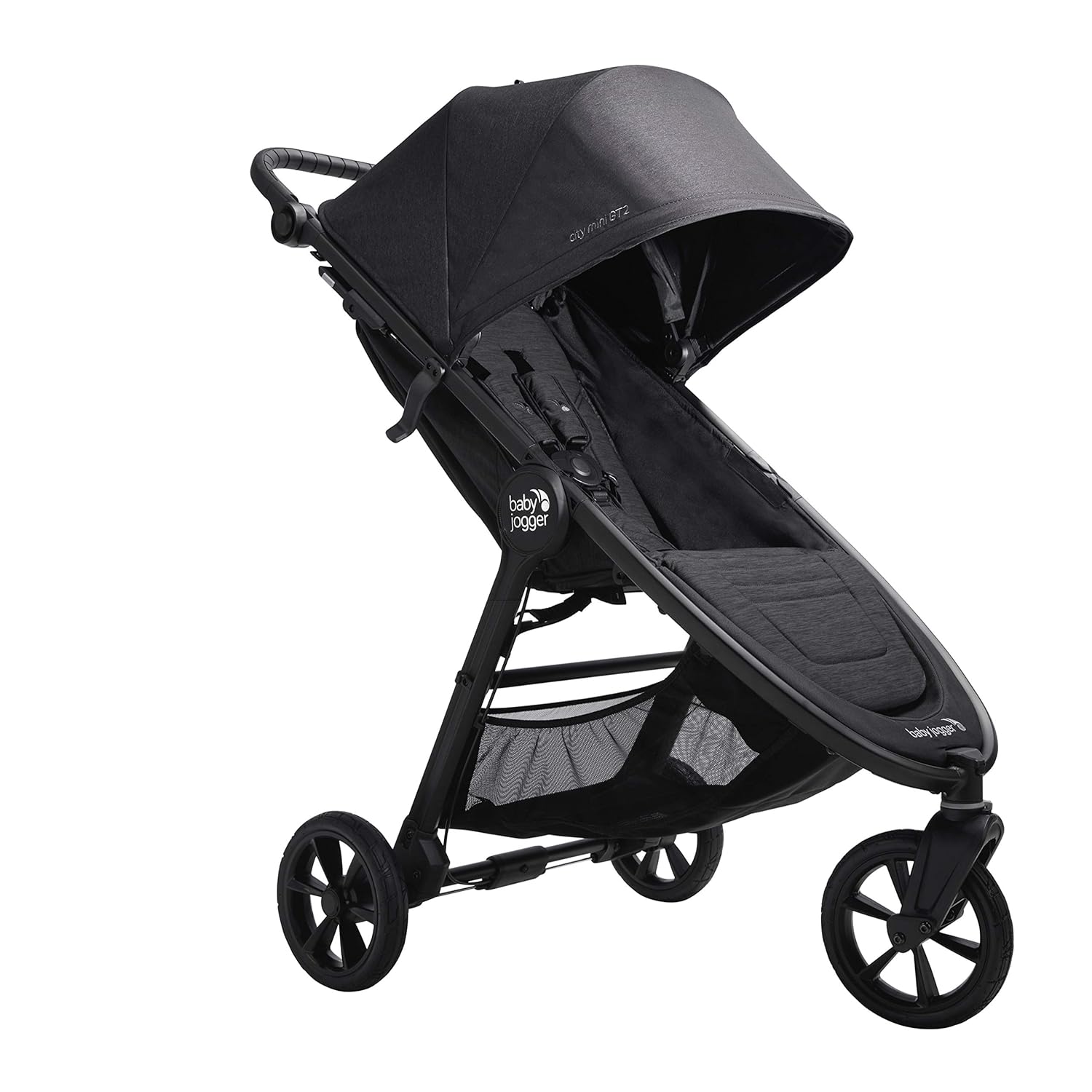


- Baby Jogger City Mini GT2: all-terrain wheels and a quick one-hand fold. A great everyday stroller. My take: we had the original City Mini GT with our first and loved it. The one-hand fold is as easy as it sounds. My only complaint was the small basket.
- UPPAbaby Minu V3: compact fold, but it still feels like a real stroller.
- Bugaboo Butterfly 2: folds small enough for an overhead bin. Best for frequent flyers.
- Joolz Aer2: about 14 lbs with a one-hand fold. Easy to carry up stairs or through the airport.
Full-Size and Modular


- UPPAbaby Cruz V3: the one-stroller-for-years pick. Reversible seat, big basket, works with an infant car seat.
- Chicco Corso: modular seat for less money. Pairs with Chicco KeyFit car seats.
Convertible (Single to Double)


- UPPAbaby Vista V3: grows from one kid to two (or three). The one most parents end up loving. My take: we sold our City Mini GT and switched to the Vista when our second was born. I love all the configurations and the huge basket, but I do miss how light and easy the City Mini was. Tip: we saved by buying the floor model.
- Baby Jogger City Select 2: tons of seat combinations for less than the Vista.
Jogging and All-Terrain


- Thule Urban Glide 3: smooth for runs and still easy for everyday walks.
- BOB Alterrain Pro: for serious runners and rough trails.
- Joovy Zoom360 Ultralight: the budget pick for occasional jogs.
Best Value
 Britax Willow Brook S+ |
|---|
- Britax Willow Brook S+: stroller and infant car seat in one box, so you buy once.
Still Deciding?
Take a look at the strollers I’ve personally used and loved, with photos and real-world notes: Baby Stuff · Strollers
And if you’re building a registry from scratch, start here: Baby Registry Tips and Sample Amazon Baby Registry.
Stroller FAQs
Around 6 months, once your baby has good head and neck control and can sit up with support. Before that, use a seat that reclines fully flat, a bassinet attachment, or your infant car seat clicked into the stroller.
No, but it can be convenient. A travel system is a stroller and infant car seat sold together that click right in. You can also buy them separately. Just make sure the car seat works with your stroller or that an adapter is available.
Most jogging stroller brands recommend waiting until your baby is at least 6 months old, and some say 8 months. Check your stroller’s manual and ask your pediatrician before you start running.
For most families, the $200 to $400 range is the sweet spot. Pricier strollers ride smoother, fold more easily, last longer and resell better, but they aren’t any safer. Buy the one that fits how you actually live.
If your kids will be about two to three years apart or less, a single-to-double stroller like the UPPAbaby Vista V3 usually costs less than buying a single now and a double later.
Most airlines let you gate-check a stroller for free. Some compact travel strollers, like the Bugaboo Butterfly 2 and Joolz Aer2, fold small enough to fit in many overhead bins. Airline rules vary, so check before you fly.
Usually, yes. Check for recalls on the CPSC website, make sure the brakes, harness and folding lock all work, and look for any cracked or missing parts.
Save this for later: pin the image below to your baby board so you have these 9 questions handy when you’re shopping.