This post contains affiliate links. If you buy through them, I may earn a small commission at no extra cost to you. As an Amazon Associate I earn from qualifying purchases. Last updated October 2026.

Nobody warns you that you will spend the first year of parenthood thinking about sleep more than you think about food, money, or your own name. Yours, theirs, whether anyone in the house is getting any.
I can’t promise you a baby who sleeps through the night. What I can tell you is what I learned about sleep gear across three kids, which features made nights easier, and what I would think twice about buying. This covers swaddles and sleep sacks, the swaddle transition, baby monitors, white noise, crib sheets, and the handful of things I’d skip entirely.
Safe sleep first, gear second
None of the products below matter if the basics aren’t in place. From the American Academy of Pediatrics:
- Baby sleeps on their back, every nap and every night, for the first year.
- Use a firm, flat, non-inclined mattress in a safety-approved crib, bassinet or play yard, with only a fitted sheet. No loose blankets, pillows, bumpers or stuffed animals.
- Stop swaddling at the first sign of rolling. Some babies start as early as 2 months.
- Skip weighted swaddles and weighted sleep sacks. They can put too much pressure on a baby’s chest and lungs.
- Share a room, on separate sleep surfaces, for at least the first six months. Watch for overheating, such as sweating, a hot chest or flushed skin.
Read the AAP safe-sleep guidance and swaddling advice. I’m a mom of three, not a pediatrician, so take everything below as what worked in my house, not medical advice.
Short on time? The four things I’d buy again
- A stack of muslin blankets. Useful for burps, feeds and supervised tummy time; keep loose blankets out of the sleep space.
- Two swaddles, two different styles. Let the baby vote before you commit.
- One sleep sack for the day swaddling ends, which comes faster than you think.
- A monitor that fits your house and routine. Choose the features you will actually use.
Start with a safe sleep space and a few practical basics. Add the extras only when you know what problem you need them to solve.
What’s in this guide
- Blankets, swaddles and sleep sacks
- The swaddle-to-sleep-sack transition
- Baby monitors
- White noise, night lights and soothers
- Crib sheets
- Toddler bedding: for later
- What I’d skip
- Baby sleep questions I get asked most
Blankets, Swaddles and Sleep Sacks
Muslin blankets: buy more than you think, register for fewer
Your blankets will get poop, pee and spit-up on them, so a few washable spares help. Lightweight muslin is what I kept reaching for: burp cloth, nursing cover, or a mat for supervised tummy time. A thin blanket can also be used for swaddling before your baby shows signs of trying to roll. Keep loose blankets out of the crib, and avoid draping them over a stroller or car seat where they can restrict airflow.
Registry tip: keep the number low on your actual registry. You will receive blankets you did not ask for, at your shower and after the baby arrives. Blankets are what people give. Spend your registry slots on things nobody thinks to buy you.
Swaddles: register for variety, not volume
You’ll probably swaddle for the first couple of months. Technically you don’t need a purpose-built swaddle, because a muslin blanket works fine. Practically, at 3am with a baby who has escaped your beautiful burrito for the fourth time, a zipper is worth actual money.
Here’s the part nobody tells you: babies have opinions. One of mine hated the sound of velcro, one would only sleep with her arms up, one did not care. So buy two different styles before the baby comes instead of four of the same thing, and let them tell you what they like.
Zip swaddles (the easiest ones at 3am)
 SwaddleMe |
 Woombie |
 Love to Dream |
|---|---|---|
| A zip-up pod for newborns. Simple, fast, and very hard to get wrong when you’re half asleep. Best for: first-time parents who want zero technique involved. | Another zip style. The shape gives a little more room to wiggle than a flat wrap. Best for: babies who fight having their arms pinned flat. | The arms-up design. It’s often natural for babies sleeping on their backs to want their hands up by their face, and this lets them. Best for: the baby who keeps working their hands free of everything else. |
Wrap and velcro swaddles (the snuggest hold)
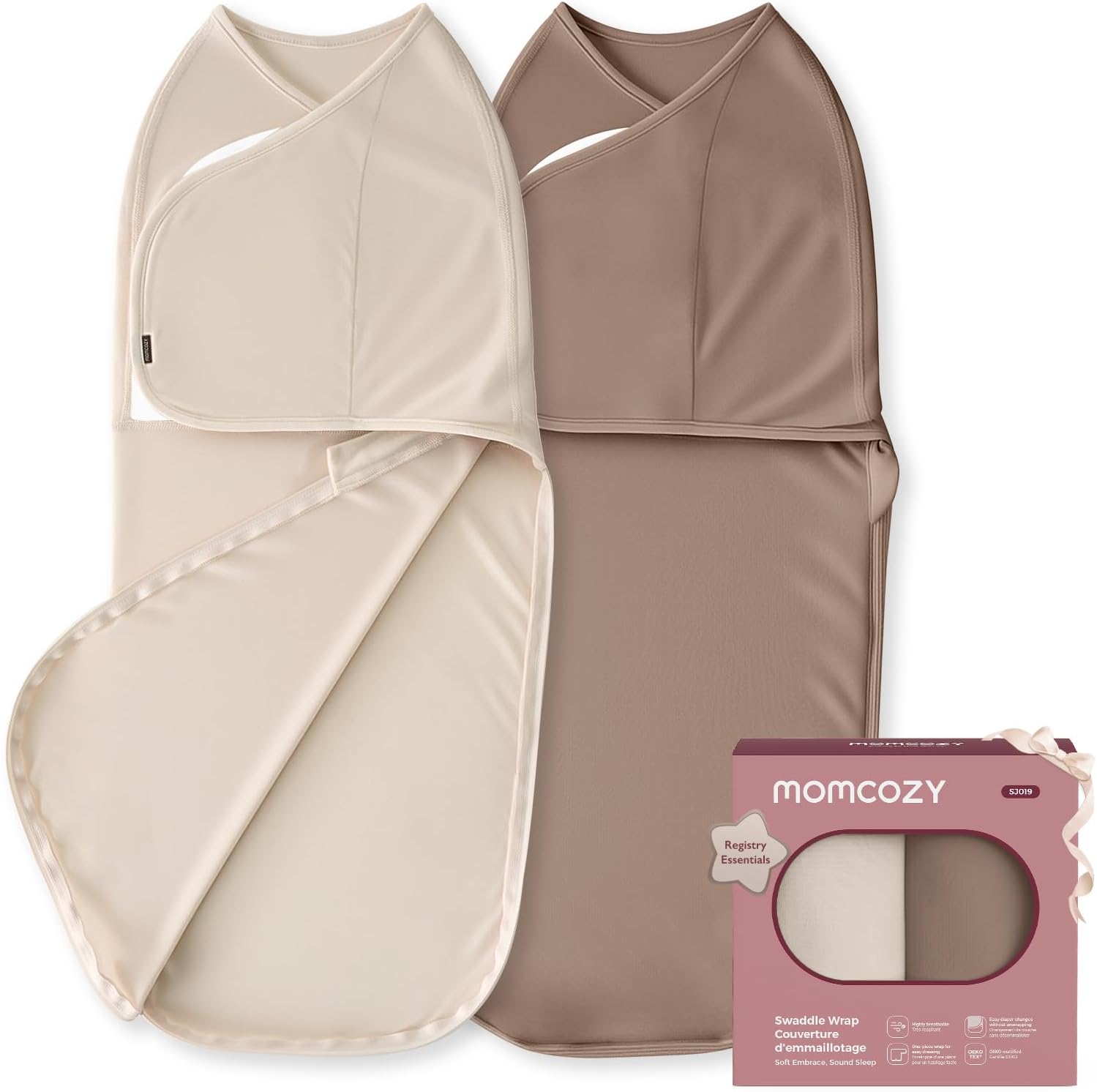 Momcozy Swaddles |
 SwaddleMe Monogram Swaddle |
|---|---|
| A wrap-style option with quiet fasteners. Check the size and fit instructions before use. | A wrap-style swaddle from SwaddleMe. Compare the closure and sizing with the zip styles above. |
- Miracle Blanket: a wrap style that gets a snug swaddle with no velcro and no zipper. There’s a small learning curve, but it holds. Best for: a committed escape artist.

An adjustable wrap that can be used with arms in or out, according to the product instructions. Stop swaddling at the first sign of trying to roll; arms out alone is not enough if the wrap still compresses the chest or body.
When to stop swaddling
Stop at the first sign your baby is trying to roll, even if they haven’t managed it yet. Some babies start around 2 months, which always feels early. A swaddled baby who rolls onto their stomach can’t push themselves back up, and that’s the risk.
Two more things worth knowing. Swaddle snugly around the chest but loosely around the hips, with room for the legs to bend up and out, because a tight straight-leg wrap is linked to hip dysplasia. You should be able to slide two or three fingers between your baby’s chest and the fabric. And skip anything weighted. Weighted swaddles and weighted sleep sacks are not recommended at all.
Sleep sacks, aka wearable blankets
Once swaddling ends, a sleep sack takes over. It keeps your baby warm without adding a loose blanket to the crib, and unlike a blanket, they can’t kick it off at 1am and then wake up cold and furious about it. We used them for as long as each kid was in a crib.
 aden + anais Muslin Sleeping Bag |
 Burt’s Bees Baby Beekeeper Wearable Blanket |
|---|---|
| A muslin sleeping bag for the arms-free stage. Match the size and warmth to your baby and room. | An organic cotton wearable blanket. Check the exact size, TOG and care instructions before choosing. |
Three things to check before you buy:
- TOG rating and fit. TOG describes warmth. Use the specific manufacturer’s room-temperature and clothing guide, and choose the correct size by weight and height. The neckline should not slip over your baby’s face.
- Arms out. Once your baby is rolling, the arms stay free. A sack that compresses the arms or chest follows the same stop-at-rolling rule as a swaddle.
- Inverted zipper. One that zips from the bottom means night changes without undressing the entire child. Not necessary, but nice to have.
The Swaddle-to-Sleep-Sack Transition
The move to arms-free sleep can take some getting used to. A baby’s startle reflex may wake them when their arms are no longer wrapped. Keep the bedtime routine familiar and use a correctly fitted, non-weighted, arms-free sleep sack. Swaddling is optional, and you do not need a special transition product.
Considering a transition suit? Products such as Merlin’s Magic Sleepsuit have their own fit and developmental limits. Do not assume that reaching a particular age makes one appropriate. Check the exact product’s instructions and recall status, and ask your pediatrician if you are unsure. An arms-free sleep sack keeps the transition simpler.
Magic Sleepsuit recall: check the batch code. The March 5, 2026 recall covers HALO Magic Sleepsuits with codes PO30592, PO30641 and PO30685 because zipper heads can detach. Stop using an affected suit immediately and follow the CPSC recall instructions for the available remedy.
Baby Monitors
If you live in a small apartment, you may honestly not need one. You will hear everything, including things that aren’t happening. If your place is bigger or has stairs, a monitor saves you the “was that a cry or the dishwasher” trip up and down twelve times a night.
Four questions to answer before you shop:
- Audio only, video, or movement and oxygen tracking?
- Dedicated screen, or your phone?
- Do you need to check in from outside the house?
- Is a fixed camera view enough, or do you want pan, tilt and zoom?
Dedicated screen vs. your phone
A dedicated, non-Wi-Fi monitor uses a separate parent screen and does not need your home internet connection. Check range, battery life and whether sound stays on when the screen is asleep. Some monitors also offer Wi-Fi, so read the model details rather than assuming every dedicated screen works the same way.
A phone-based monitor lets you view a camera through an app, often with remote access. Check whether it supports reliable background audio, what happens if Wi-Fi drops, and which features require a subscription. The camera still needs its own hardware; your phone replaces the parent screen.
Choose the setup that fits how you will use it at night. Keep cameras, sound machines and all cords out of your baby’s reach, including as they grow.
Using an indoor security camera as a baby monitor
With our first two babies we set up this camera on our home network and watched it from our phones. It’s cheaper than a purpose-built monitor and you can put several cameras in one app, which was great for seeing both kids at once. The catch is that it takes someone reasonably tech-savvy to set up properly.
By the time our third arrived, both of those cameras had died, so we switched to the Nest Indoor Camera. Much easier to set up, better looking, and I can pull it up on a smart display instead of my phone.
Check security and support before you buy. Use a unique password, enable two-factor authentication when available, and install software updates. For an older camera, confirm that the manufacturer still supports it. Good account habits help, but no connected device is risk-free.
Movement and oxygen monitors
Movement and oxygen readings can reassure some parents and make others more anxious, especially when alarms interrupt sleep. These devices are optional for most families. If your baby needs medical monitoring, ask your clinician which device and response plan are appropriate.
These monitors do not prevent SIDS. The AAP advises against using home cardiorespiratory monitors as a SIDS-reduction strategy. A wearable or sensor pad cannot replace a safe sleep setup or adult care. See the AAP safe-sleep guidance.
- Owlet sock monitors: the original Smart Sock and newer Dream Sock are different products. Check the exact model, intended use and age/weight limits rather than relying on an older listing or review. No sock monitor should be treated as protection against SIDS.
- Angelcare Movement and Sound Monitor: a sensor pad that goes under the mattress and sounds an alert if it detects no movement for 20 seconds. No wearable, nothing on the baby.
White Noise, Night Lights and Soothers
Your newborn spent nine months inside a body that was never quiet. Whooshing, heartbeat, muffled voices, your lunch. Silence is the weird part, not noise. White noise recreates some of that, and it settles a lot of babies.
Two honest caveats before you buy one.
Keep it optional. Some babies settle with steady background sound; others do fine without it. Try a short session at a low setting before adding another device to your routine.
Use low volume, distance and limited duration. The AAP advises placing sleep machines as far from a baby as possible, keeping the volume low, and limiting how long they run. Keep the device and its cords outside the sleep space. A phone app is only a rough volume check, not a guarantee of safety. Read the AAP guidance on noise exposure.
Portable sound machines
 Hushh |
 Sleep Sheep |
 Hatch Go |
|---|---|---|
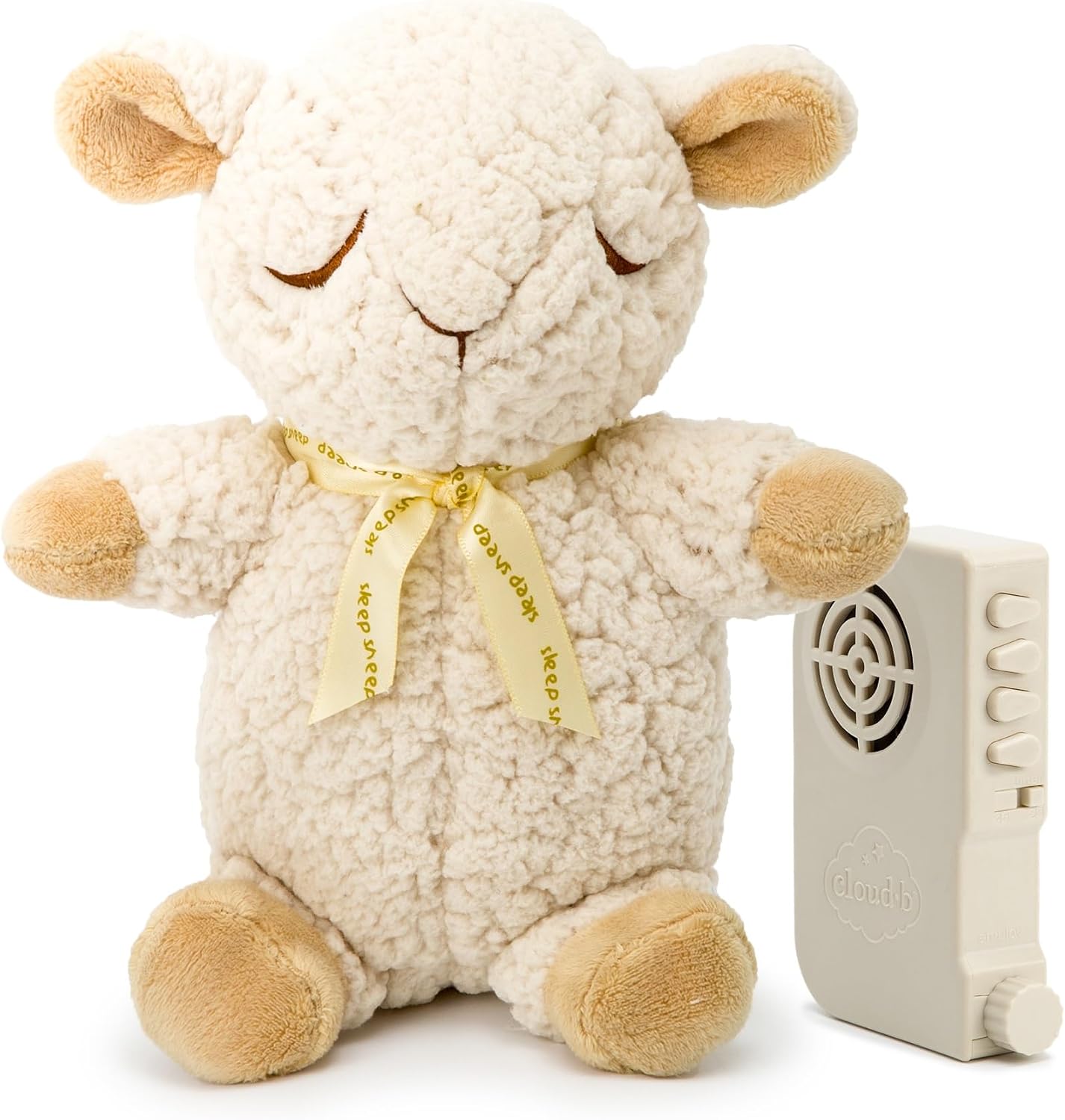
| The one that lived in our diaper bag. Small, rechargeable, offers portable white noise, with a tiny night light and a child lock. Use a low setting, keep it well away from your baby, and limit the duration. Best for: naps away from home. | This doesn’t play all night, so I wouldn’t rely on it for constant white noise. Where it shines is the sound-activated sensor, which restarts the soothing sound on its own when the baby startles or cries. It got our first two back to sleep before we’d even gotten out of bed more times than I can count. Check the exact model’s timer and sensor settings. Keep this soft toy outside the crib. Not for: a light sleeper who will wake the moment the sound stops. |
- An old phone or iPod: put it in airplane mode and use a free white noise app. If you already have one, it is an option to try before buying another device. Keep the phone and charging cable well away from the sleep space.
Night light and sound machine combos
These earn their keep later, once you’re dealing with a toddler who gets up at 5:40am and wants to discuss it.


Crib Sheets
Three or four crib sheets is plenty for most babies. You don’t need a linen closet dedicated to this.
Changing a crib sheet at 2am during a stomach bug is one of the genuinely worst jobs in parenting, somewhere between wrestling and furniture assembly. If your baby has frequent blowouts or spits up a lot, a QuickZip Crib Sheet is worth a look. A base sheet stays on the mattress and you swap only the zip-on top layer, which takes about fifteen seconds and no lifting.
Toddler Bedding: For Later
Toddler bedding belongs in a separate category from infant sleep gear. The Aden + Anais Bed in a Bag is an option for the later toddler-bed stage. Keep loose bedding out of an infant sleep space; turning one is not an automatic signal to add a full bedding set. Check the bed and bedding instructions and ask your pediatrician if you are unsure about readiness.
What I’d Skip
The fastest way to save money on baby sleep gear is to not buy these.
- Crib bumpers, including the “breathable” mesh ones. Padded crib bumpers were banned from sale in the US under the Safe Sleep for Babies Act. If you inherit a crib set with bumpers, use the sheet and skirt and bin the rest.
- Inclined sleepers and loungers for sleep. Inclined infant sleepers are banned in the U.S. A lounger is not a substitute for a crib, bassinet or play yard approved for infant sleep. Move a sleeping baby to an appropriate flat sleep surface.
- Weighted swaddles and weighted sleep sacks. Covered above, and worth repeating.
- Twelve blankets. You will be given them. Save the registry slot.
- Four of the same swaddle. Buy two styles, find out what your baby likes, then stock up on the winner.
- A crib mobile with a sound machine built in. It’s directly above the baby’s head, which is the one place you don’t want a speaker.
Baby Sleep Questions I Get Asked Most
How many swaddles do I actually need?
Two or three, in at least two different styles. You’ll want a spare while one is in the wash, and the variety is how you find out whether your baby is a zip baby or an arms-up baby.
When do I switch from a swaddle to a sleep sack?
Stop swaddling as soon as your baby shows signs of trying to roll, even if they have not completed a roll. Switch to a correctly fitted, non-weighted sleep sack that leaves the arms free. Do not continue an arms-in or one-arm-in swaddle after those signs appear.
Do I really need a video monitor?
Need, no. Small apartment, one floor, light sleeper parent? An audio monitor or nothing at all is fine. Multiple floors, a sound sleeper, or a baby whose cries you want to assess before you go in? Video is worth it, mostly because you can see that they’re fussing in their sleep and go back to bed.
Is white noise safe for babies?
Volume, distance and duration all matter. Use a low setting, place the machine as far from your baby as possible, and limit its use. Keep it and its cords outside the crib. See the AAP noise guidance linked above.
How many crib sheets do I need?
Three or four fitted sheets is a practical starting point, with extras if laundry runs infrequently. Use a sheet that fits your mattress snugly. If you use a waterproof protector, choose one permitted by the mattress instructions; avoid extra padding or layering several sheets and pads.
Are breathing and oxygen monitors worth it?
They are optional for most families and have not been shown to prevent SIDS. Consider whether alerts will help you or increase your anxiety. For a medical concern, speak with your pediatrician rather than relying on a consumer device.
One Last Thing
Gear helps at the margins. It does not fix a four-month sleep regression, and no swaddle on earth makes a baby sleep before they’re ready. What it can do is remove the small friction points, so that the hard nights are only as hard as they have to be.
When you’re ready for the next piece of this, I’ve put together everything on methods and books here: Sleep Training, Advice and Resources.
Save this one. Pin it now so it’s there at 3am when you’re one-handed, bleary, and trying to remember what a TOG rating is.
Keep reading
- Baby Sleep Spots: where your baby can actually nap
- Why I Love the Halo Bassinest
- Baby Registry Tips: 7 Lessons From a Second-Time Mom
- Baby Registry Must-Haves: Classic, Budget, Luxury and Minimalist Picks
- Tips for Soothing a Colicky Baby
- Baby Items You Can Do Without, At Least For Now

Its not my first time to pay a visit this site, i am visiting this site dailly and get
pleasant information from here everyday.
Thanks very nice blog!
Heya i’m for the first time here. I came across this board and
I find It really useful & it helped me out much.
I hope to give something back and help others like you helped me.
Very good info. Lucky me I found your site by accident (stumbleupon).
I’ve saved it for later!